
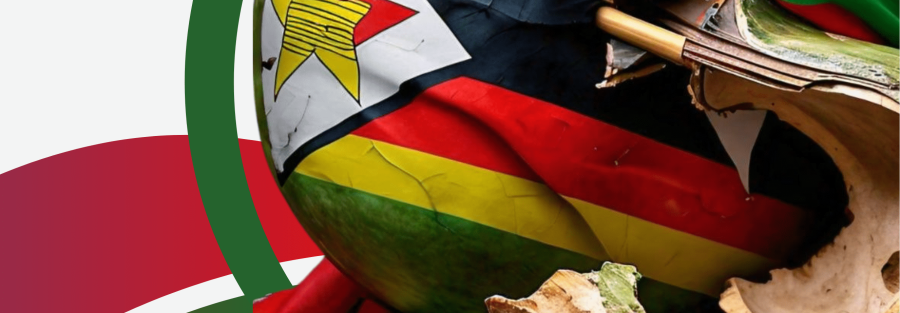
The Broken Calabash: State of Peace Report 2023 – 2024
Download the Full State of Peace Report 2023-2024
Back in 1984, while Zimbabwe was locked in a bloody conflict that killed over 20 000 civilians in the Midlands and Matebeleland regions, the United Nations General Assembly adopted Declaration on the Right of Peoples to Peace which recognizes that peoples have a sacred right to peace. Through resolution 39/11, the General Assembly solemnly declared that the preservation of the right of peoples to peace and the promotion of its implementation constitute a fundamental obligation of each State.
This year, we mark 40 years since the declaration was passed. The world order has significantly shifted, and yet many communities still find themselves unable to enjoy the right to peace. There is a clear obligation on States to promote peace. This obligation includes most importantly the obligation for the State not to unleash violence on its people. And where such violence has been unleashed, there arises an obligation to pursue justice and accountability, to ensure that affected communities get an opportunity to process the trauma and work towards healing and reconciliation.
Zimbabwe has over the years been grappling with the question of peace. We have as a country and as communities suffered the scourge of violence dating back to the colonial era. To gain our independence, we have had to wage a war, sacrificing over 50 000 people in the process. And yet even our independence has failed to deliver peace. Post-independence, the majority government inherited the entire infrastructure of violence which it decided not only to hold on to but has over the years proceeded to deploy against its people. We have continued to witness unspeakable atrocities in independent Zimbabwe.
This is why in 2020, we launched the Right to Peace Campaign, to give communities an opportunity to build peace from inside, from the ground up. We realised, as was expressed by Marta Ruiz of the Colombia Truth Commission, that peace does not come to us. “Peace is a change in the way we live and relate.” She spoke. This is because we see the reluctance of the state to advance the peace agenda in Zimbabwe. Fear of justice and accountability stands in the way. But if the State with all its mighty is afraid, what more for the communities who have no armies or riot police, what must they do?
This year, we saw significant milestones that had great potential for peace. First was the launch of the Gukurahundi public hearings to be presided over by traditional leaders. We note with regret that this event, glorified by the state media as it was, remains another avoidance tactic in flagrant violation of the Constitution as it usurps the conflict transformation mandate that ought to have been carried out by the National Peace and Reconciliation Commission (NPRC) but was sadly prevented through political interference and resources starvation. The so called Gukurahundi hearings, presided over by traditional leaders perceived to be aligned to the ruling party are unlawful and illegitimate. The mandate to deal with a conflict of that magnitude can only be handled by an independent commission.