

Press Statement
On the International Day for the Right to the Truth
“The truth is an empowering and healing force. We embrace it for the past, the present and the future.” UN Secretary-General António Guterres
The Zimbabwe Human Rights Association (ZimRights) joins the rest of the world in commemorating the International Day for the Right to the Truth Concerning Gross Human Rights Violations (International Day of Truth). Our theme for this year is: Where the truth is compromised, justice is defeated.
The International Day of Truth was established on 21 December 2010 by the United Nations General Assembly through resolution a/res/68/165. The purpose of this day is to honour the memory of victims and survivors of gross human rights violations, to pay tribute to those who devoted their lives to the struggle for human rights and recognise in particular the important work and values of Archbishop Oscar Arnulfo Romero of El Salvador. Archbishop Romero was assassinated on 24 March 1980, after denouncing violations of the human rights of the most vulnerable populations and defending the principles of protecting lives, promoting human dignity and opposition to all forms of violence.
Zimbabwe has been bedevilled by many cases of gross human rights violations in which over 80 000 people have been killed in the last half a century. Many more thousands have been tortured and now live with trauma.
The nation is in desperate need for truth and healing from the past horrors. These include the Gukurahundi atrocities, police brutality from the 1998 food riots, the political violence that has characterised our elections, Operation Murambatsvina in 2005, June 2008 electoral bloodshed, the 1 August 2018 killing of civilians by the military, the economic atrocities documented in various reports, the 2024 unlawful evictions, among many other documented and undocumented violations. Without a credible truth recovery process, the full extent of these atrocities and their impact on the nation may never be known.
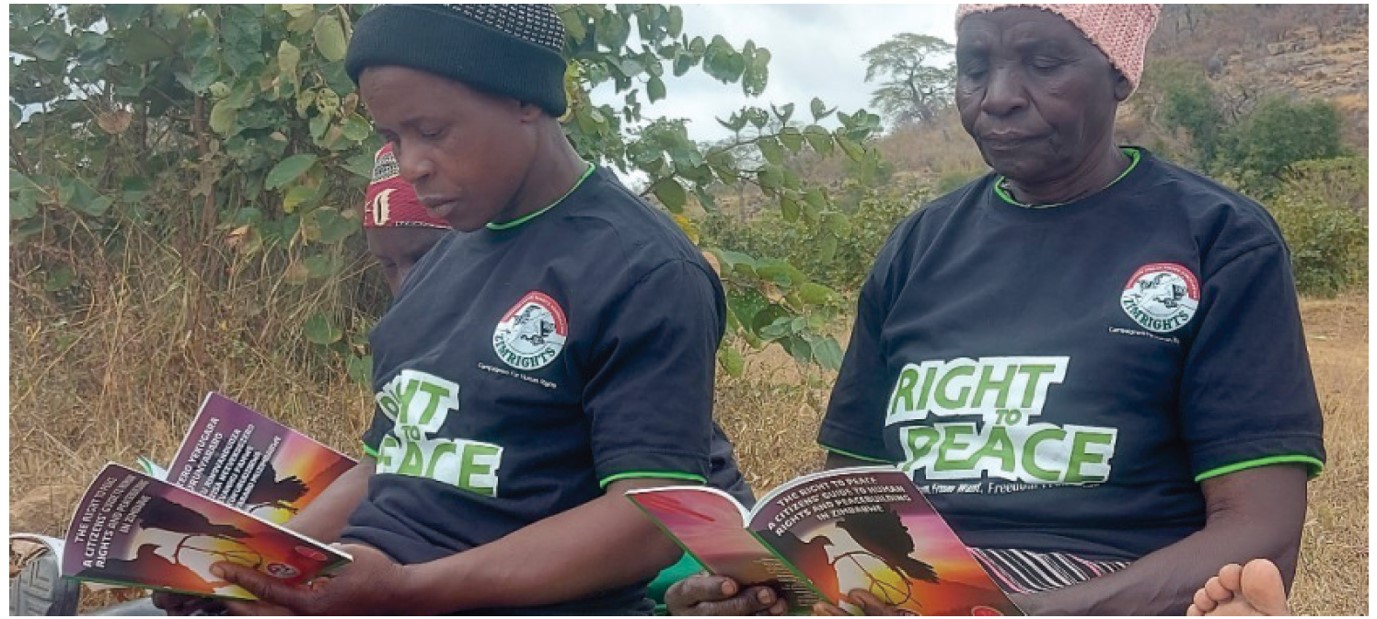
Under ZimRights’ Right to Peace Campaign, the 2022-2023 State of Peace Report finds that Zimbabweans live in a state of perpetual insecurity. The report acknowledges that Zimbabwe has a significant history of repression, particularly against dissenting voices. The report further notes, “Even when citizens are not directly targeted for reprisals for exercising fundamental rights or voicing dissent or criticism against the government, they still experience the ‘chilling effect’ of such violence.”
When past atrocities are not addressed, they continue to influence the present. There is, as it stands, no acknowledgement and no accountability for these atrocities which will continue to haunt Zimbabwe’s elusive quest for peace, healing and national cohesion. Without a clear commitment to the truth of the past, any hope of building peace in Zimbabwe will remain an illusion. The society can experience what the State of Peace Report calls ‘authoritarian peace’ emanating from fear and insecurity. Such peace is merely silence, not true peace.
In passing the resolution on the right to the truth, the UN General Assembly, under the guidance of the UN Human Rights Council sought to bring to our attention the truth imperatives of building true peace. International law has evolved over time and now recognises that there can be no peace without justice, and no justice without truth. The right to truth about gross violations of human rights and serious violations of international humanitarian law is an inalienable right linked to the State’s duty to protect human rights, conduct effective investigations, and guarantee effective remedies and reparation. It is enshrined in international binding instruments such as the Convention for the Protection of All Persons from Enforced Disappearance and in a variety of other instruments such as the Basic Principles and Guidelines on the Right to a Remedy and Reparation for Victims of Gross Violations of International Human Rights Law and Serious Violations of International Humanitarian Law.
Zimbabwe’s own domestic laws have embraced in various aspects this right. Section 2 (g) of the Constitution of Zimbabwe states that the principles of good governance which bind the state and all institutions and agencies of government includes transparency, justice, accountability and responsiveness. Section 252 of the Constitution of Zimbabwe in outlining the functions of the National Peace and Reconciliation Commission (NPRC) states that one of the NPRC’s functions is to bring about national reconciliation by encouraging people ‘to tell the truth about the past ‘and facilitating the making of amends and the provision of justice. While the constitutional mandate of the NPRC has ended without much progress to point at, this truth-telling national obligation remains outstanding.
Several provisions of the Constitution place on the state and independent bodies the obligation to ‘investigate’ and bring out the truth for purposes of justice and accountability. The Constitution enshrines the right to human dignity (Section 51), personal security (Section 52), and freedom from torture or cruel, inhuman, or degrading treatment or punishment (Section 53). Section 62 of the Constitution provides for the right to information for purposes of accountability. These fundamental rights align with the principles of truth outline in the res/68/165 of 2010 by the UN.
Looked at in the light of resolution a/res/68/165, all these strengthen the principle that not only is the right to the truth a right for Zimbabweans, but it is also a pre-requisite for healing and reconciliation.
ZimRights notes that while there have been some attempts at truth telling, much more remains outstanding. While the NPRC has tried to convene public hearings on Gukurahundi, its mandate has been unlawfully usurped by the government and imposed on a select elite group of traditional leaders. This approach not only violates the Constitution but also is not inline with good practice in dealing with past atrocities. When millions of Zimbabweans spoke out about transitional justice in the current Constitution, they made it very clear that issues like Gukurahundi must be left to an independent and credible body. The Chiefs Council, which has clearly expressed its allegiance to partisan politics cannot be such a credible body. The proximity of the Chiefs Council to political actors that stand accused of masterminding the Gukurahundi atrocities raises serious credibility issues, undermines public confidence, and raises fears that evidence will be tempered with, and the truth will be compromised.
Outside Gukurahundi, there many other atrocities that remain a mystery and demand to be addressed. These include past abductions with some individuals still missing, others murdered while others are nursing wounds. Since Operation Murambatsvina, there have been massive evictions that have left many people homeless and vulnerable. Contrary to the promise of the ruling party during the land reform programme that Zimbabwe will never be a colony again, many communities have been colonized by foreign businesses that pay no attention to the environmental rights of the communities. They want the truth.
As the world commemorates the International Day of Truth, ZimRights, which works with over 250 000 activists across the country, fully aware of the wounds that the nation is carrying, calls on the following:
- That the government of Zimbabwe takes steps to comply with its obligations under the right to the truth about gross violations of human rights and serious violations of international humanitarian law. These steps include establishing a truly independent commission to address past atrocities that include the Gukurahundi atrocities. The Chiefs Council does not meet the requirements of an independent body for such purposes.
- That the government of Zimbabwe takes steps to acknowledge its role in gross human rights violations and release for public accountability such important information as the Chihambakwe Committee of Inquiry into Midlands and Matebeleland Atrocities Report and allow for the perpetrators to be held accountable.
- That the government of Zimbabwe implements the recommendations of the Motlanthe Commission into the August 2018 shootings which include holding the persons responsible to account, instituting necessary security sector reforms, compensation for victims and their families and measures towards rebuilding the relationship between the security services and the people of Zimbabwe.
- That the Parliament of Zimbabwe, in establishing the Independent Complaints Commission (ICC) pays close attention to the role of the security services in past human rights violations and puts in place persons of integrity who will ensure that the ICC works for truth and justice for victims and survivors of past atrocities perpetrated by the security services.
- That civil society actors in Zimbabwe remain in principled solidarity with victims and survivors of human rights violations, and resist any capture, seductions or threats that compromise the cause of truth, justice and accountability. Many victims and survivors depend on this solidarity against powerful interests that seek to sacrifice them for political expedience.
- That the international community and the development partners continue to stand with the people of Zimbabwe in their quest for healing and reconciliation while acknowledging that only the communities worst affected by human rights violations must lead in creating and sustaining a culture of truth, justice and accountability.
ZimRights believes that the right to truth is not merely a principle but a beacon of hope for countless survivors and their families. The right to truth is integral to the restoration of dignity and the healing of a nation’s wounds. On this day, and every day, ZimRights stands firm in its conviction that truth is the cornerstone of reconciliation and a prerequisite for lasting peace. Where the truth is compromised, justice is defeated.
Issued by ZimRights’ Right to Peace Action Zone
info@zimrights.org.zw