
ZimRights Supports the Launch of Zimbabwe’s New Mediation Initiative
Africa University’s Institute of Peace Leadership and Governance (IPLG) successfully concluded a high-level symposium on September 20, marking the end of a five-day Insider Mediation (IM) training of trainers (ToT) workshop. This workshop, supported by the Berghof Foundation and the European Union, has launched a new mediation initiative in Zimbabwe. ZimRights National Director, Dzikamai Bere, served as one of the facilitators at both the training and the symposium, which wrapped up on Friday, September 20, 2024.
The initiative forms part of the “Building Peace from the Inside: Supporting Insider Mediation (IM) for Sustainable Conflict Transformation” project, jointly implemented by Africa University, the Berghof Foundation, and the European Union. It aims to enhance the knowledge and skills of insider mediators in mediation, negotiation, and dialogue through capacity-building workshops, while also creating opportunities for peer-exchange and networking.
The symposium aimed to showcase the work of insider mediators (IMs) in Zimbabwe, enhance the understanding of their role as a national resource for building sustainable peace, and strengthen ongoing peace initiatives. It also sought to identify ways to improve collaboration on mediation efforts and promote long-term resilience.
In his welcome address, Vice Chancellor Rev. Professor Peter Mageto emphasized that Africa University is a hub for transformational change across the continent, embracing its diversity.
“Hosting this event is a wonderful occasion for us as it is in line with the vision and wishes of the founding fathers and mothers of Africa University, who wanted to create a centre that would transform Africa by investing in education that creates leaders. The establishment of this university was meant to show the essence of unity of purpose for Africans,” he said.
Rev Prof Mageto added that the continent is yearning for peace, underscoring the importance of peace-building efforts in transforming Africa at a time various regions of the continent are grappling with conflicts.
“Our desire is that when some of our students who come from traumatic and troubled regions of Africa return to their countries after completing their studies with us, they arrive in peaceful nations.”
Executive Director of the IPLG, Professor Pamela Machakanja said. “This is a follow-on to the first phase that trained 47 mediators from the country’s 10 provinces. This time around, 10 mediators drawn from the 47 underwent training to put to practice strategies they learnt in the intensive first phase.”
Head of Mediation and Dialogue Division, African Union and key note speaker, Dr Akok Manyuat Madut praised the work of IMs on the continent, saying their role in resolving conflicts has been telling in countries such as South Sudan and Somalia.
“IMs stand a higher chance of succeeding in resolving conflicts as they are culturally-aligned with and speak the language of those in conflict. They are embedded in the societies so they are also ideally well-positioned to detect early warning signs of conflicts,” he said.
This he said, coupled with their deep knowledge of the political dynamics of their countries, has allowed them to succeed in fostering reconciliation and have thus, played an instrumental role in building trust.
He added that the Africa Union is now working at increasing female voices and participation in IM activities with a view of elevating them to positions of influence that fosters peace.
One of the IMs Michelle Chioniso Murinda, weighed in highlighting the need to break patriarchal barriers that still undermine women in mediation roles, relegating them to mere followers.
“We have been capacitated to take an evidence-based approach to mediation. Research informs peace-building strategies … and our focus is not only pursuing reactive peace strategies but being proactive and long-term,” she said.
Ms Nura Detweiler, the Project Manager at the Berghof Foundation expressed satisfaction with the progression of the IM support and capacity building initiatives saying it should not be a one-day event, but a continuous journey that should be backed by action.
“The symposium has brought together a lot of experts allowing for collaboration and knowledge-sharing, which leads to the transformative effect on peace-building efforts. IMs are part of the communities and they effectively take on roles of leadership in their societies,” she said.
In facilitating the roundtable discussion at the symposium, ZimRights National Director, Dzikamai Bere said the design of the Insider Mediation programme was in harmony with Zimbabwe’s cultural values that underline that communities no better the conflict issues that face and they must take the front role in resolving those conflicts.
“The Zimbabwean proverb, ‘Chinoziva ivhu kuti mwana wembeva anorwara’ (it is the earth that knows that the young one of a rat is not well) teaches of the wealth that our communities have in resolving conflicts. Insider Mediators represent the soil of the soil, the grassroots communities that must provide leadership in building peace.”
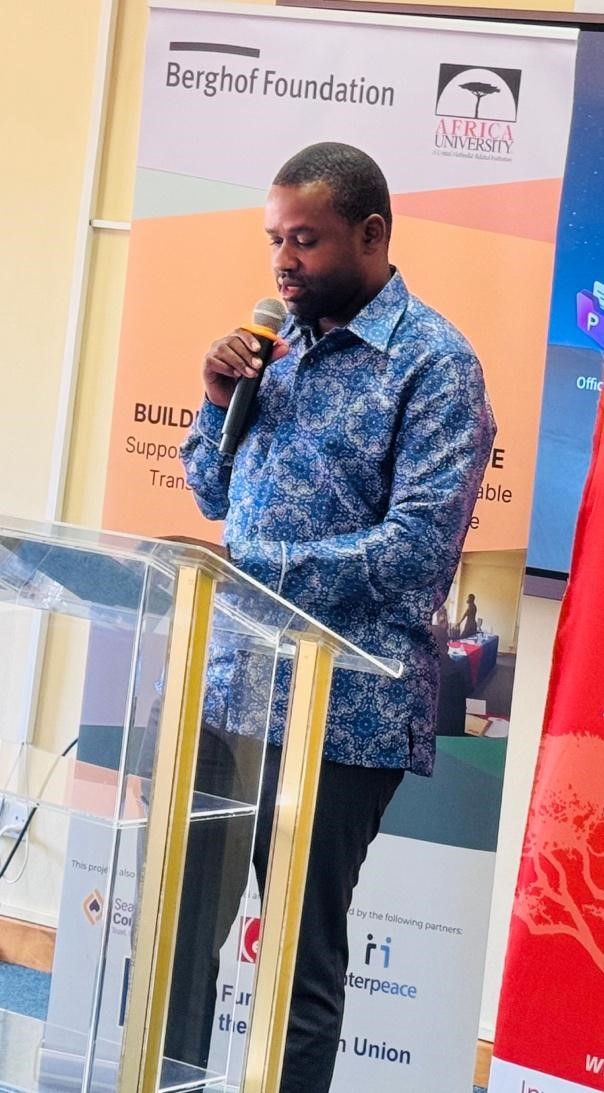
Bere invited the delegates who included high-ranking diplomats, conflict resolution experts, and veteran mediators to become the community of support around the Insider Mediators as they begin their important work in the communities. Notable among the delegates were figures such as Ambassador Stella Munyi (Kenya), Ambassador Alexander G. Ntrakwa (Ghana), Director-Liaison Office to the African Union and Advocacy, All Africa Conference of Churches, Dr Gorden Simango, Regional mediator, Rev Anastacio Chembeze and National mediator, Father Fidelis Mukonori, shared their experiences in mediating conflicts across Africa, including high-stakes political negotiations.
Participants in the workshop, including government officials, community leaders, and civil society actors, left with practical tools for implementing IM strategies in their respective regions. For many, the symposium provided an opportunity to network with peers and experts, fostering a community of practice dedicated to peacebuilding in Africa.
As the symposium drew to a close, the resounding message was clear: IM holds tremendous potential for transforming conflict landscapes in Africa.
Story originally published on the Africa University website on 20 September 2024. Revised by the ZimRights Information Department. Original story available on https://aunews.africau.edu/high-level-symposium-seals-5-day-insider-mediation-capacity-building-workshop/ Picture Credit – Africa University